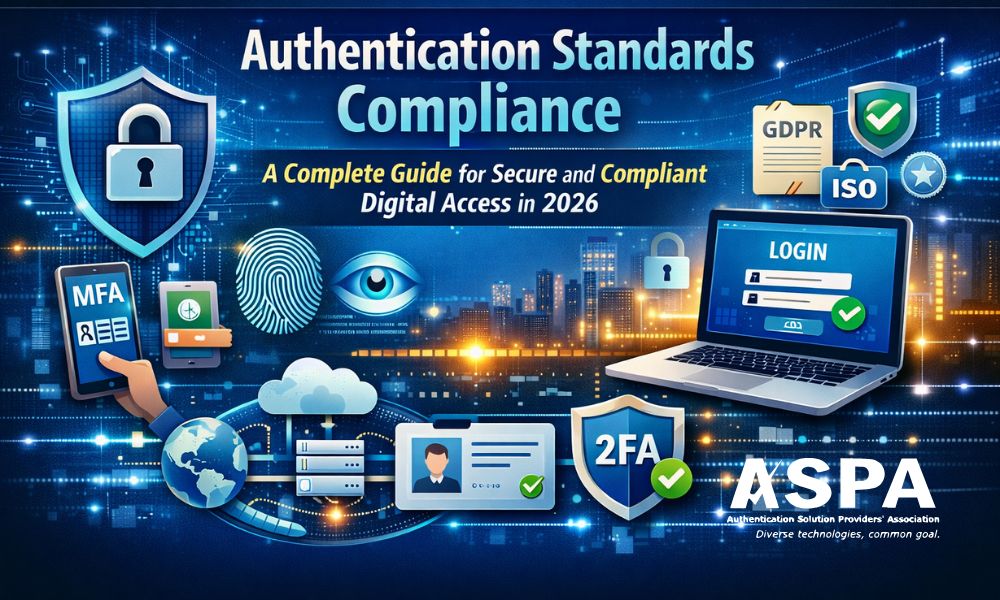
In today’s digital-first world, organizations rely heavily on online systems, cloud platforms, and connected applications to run their operations. As cyber threats become more advanced and regulations more strict, simply having a login system is no longer enough. This is where Authentication Standards Compliance becomes critical. In simple terms, it means following globally accepted authentication protocols to ensure users are verified securely, consistently, and legally. In the middle of modern security strategies, Authentication Standards Compliance helps organizations protect identities, prevent breaches, and build trust with users, regulators, and partners alike.
By 2026, compliance with authentication standards is no longer optional—it is a business necessity for scalability, data protection, and global operations.
What Is Authentication Standards Compliance and Why Does It Matter in 2026?
Authentication Standards Compliance refers to an organization’s adherence to recognized frameworks and protocols that define how user identities are verified and managed securely. These standards ensure that authentication processes are interoperable, secure, auditable, and aligned with legal requirements.
Why it matters more in 2026:
- Digital identities are expanding across cloud, mobile, IoT, and AI systems
- Cyberattacks targeting credentials are increasing every year
- Governments are enforcing stricter data protection and privacy laws
- Customers expect seamless but highly secure login experiences
Without proper compliance, businesses face:
- Higher risk of data breaches
- Legal penalties and regulatory fines
- Loss of customer trust
- Integration issues with partners and platforms
Organizations aligned with global guidance from bodies such as ASPA Global are better positioned to implement future-ready authentication models that balance security, usability, and compliance.
What Is the Difference Between OAuth, OpenID Connect, and SAML Compliance?
Understanding authentication standards starts with knowing the most widely used protocols. While they are often mentioned together, each serves a different purpose.
OAuth 2.0 (Authorization Standard)
OAuth is primarily designed for authorization, not authentication.
Key points:
- Allows applications to access user data without sharing passwords
- Commonly used for API access and third-party integrations
- Supports token-based access
- Widely adopted in mobile and cloud applications
Compliance focus:
Secure token handling, scope management, and proper consent flows.
OpenID Connect (Authentication Layer)
OpenID Connect (OIDC) is built on top of OAuth 2.0 and adds identity verification.
Key points:
- Confirms who the user is
- Provides ID tokens with user identity information
- Supports modern login experiences like social login and passwordless access
- Easier to implement than older standards
Compliance focus:
Identity assurance, token validation, and secure user session management.
SAML (Security Assertion Markup Language)
SAML is an XML-based standard commonly used in enterprise environments.
Key points:
- Enables Single Sign-On (SSO) across enterprise systems
- Strongly used in legacy and regulated industries
- Highly secure but complex to implement
- Works well with centralized identity providers
Compliance focus:
Assertion integrity, certificate management, and secure federation.
Quick Comparison
- OAuth: Authorization-first
- OpenID Connect: Authentication-first (modern apps)
- SAML: Enterprise-grade authentication and SSO
Authentication Standards Compliance ensures these protocols are implemented correctly, securely, and consistently across systems.
How Does Authentication Standards Compliance Support GDPR and Data Privacy Laws?
Data privacy regulations like GDPR, DPDP Act (India), and similar global laws require organizations to protect personal data by design and by default. Authentication plays a direct role in this responsibility.
Compliance supports privacy by:
- Ensuring only authorized users access personal data
- Reducing password sharing and credential misuse
- Supporting strong authentication (MFA, adaptive authentication)
- Enabling audit trails and access logs
Key privacy benefits:
- Data minimization: Tokens share only necessary information
- User consent: Standards enforce explicit permission flows
- Accountability: Clear identity verification and logging
- Breach prevention: Strong authentication reduces attack surface
When authentication is standardized and compliant, organizations can clearly demonstrate that they have taken appropriate technical measures to protect personal data—an essential requirement under GDPR and similar laws.
How Can Enterprises Achieve Authentication Standards Compliance at Scale?
Scaling authentication across thousands or millions of users is challenging, but achievable with the right strategy.
1. Adopt a Centralized Identity Architecture
- Use a unified identity and access management (IAM) platform
- Standardize authentication across all applications
- Avoid fragmented login systems
2. Implement Standards-Based Protocols
- Use OAuth, OpenID Connect, and SAML where appropriate
- Avoid proprietary or outdated authentication methods
- Follow best practices defined by global standards bodies
3. Enforce Strong Authentication
- Enable Multi-Factor Authentication (MFA)
- Use risk-based or adaptive authentication
- Support passwordless options where possible
4. Automate Compliance and Monitoring
- Regularly audit authentication flows
- Monitor token usage and access patterns
- Log authentication events for compliance reporting
5. Train Teams and Partners
- Educate developers on secure implementation
- Align vendors and partners with compliance requirements
- Follow guidance from organizations like ASPA Global for continuous improvement
Conclusion
As digital ecosystems grow more complex, Authentication Standards Compliance becomes the foundation of secure, scalable, and lawful access management. In 2026, it is not just about logging users in—it is about protecting identities, meeting global regulations, and enabling trust across platforms and borders.
By adopting standardized protocols, aligning with global organizations such as ASPA Global, and embedding compliance into authentication strategies, enterprises can future-proof their security posture while delivering seamless user experiences. In a world driven by digital trust, compliant authentication is no longer a technical detail—it is a business imperative.
 Authentication Standards Compliance - ASPA Global
Leave a comment